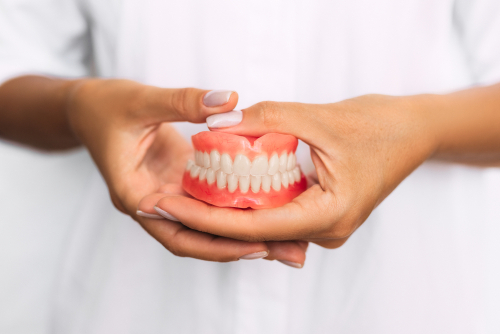
When you think of a denture, you probably imagine the classic restoration that uses your gums for support. These denture prosthetics have a bulky acrylic base that mimics the appearance of your gums and requires everyday care, similar to your natural teeth. However, unlike natural teeth, traditional dentures will eventually loosen in your mouth! Without teeth to provide stimulation to your jaw when you chew, your bone will begin to deteriorate over time. As your jawbone shrinks and your acrylic denture retains its original shape, they will no longer fit perfectly together. This creates what is known as a floating denture. Loose or floating dentures are notoriously difficult to use, causing a range of problems that affect your daily life and function.
What Is a Floating Denture?
A floating denture is a prosthetic that is no longer secure on your jaw. Rather than staying in place while you chew or bite, this denture will slide around on your gums.
Floating dentures cause problems like:
- Difficulty chewing: To break down foods, you need a strong bite. Loose or floating dentures struggle to chew many foods, especially tougher ones like meat or corn on the cob. In some cases, floating dentures may even require patients to change their diet, potentially depriving them of essential nutrients.
- Trouble speaking: Talking effectively requires the full use of your tongue and teeth. If your dentures are sliding around on your gums while you speak, your words may slur, making communication more difficult. Additionally, floating dentures can cause a clicking or whistling noise that disrupts your speech.
- Painful sores: Floating dentures move every time you speak, chew, or even smile. As the acrylic base scrapes repeatedly against your gums, it causes irritation and denture sores that make wearing your denture painful.
Without a more secure solution, your jaw will continue to shrink, changing your face shape and affecting the fit of your dentures. Fortunately, East Longmeadow Family Dental Center is here to help!
Is There a Solution for a Floating Denture?
Floating dentures affect multiple aspects of daily life, so it’s unsurprising that patients are seeking a better solution.
Most commonly, they start with a denture adhesive designed to keep a denture in place. By placing a small amount of glue on the prosthetic, you can secure your denture to your gums. However, this adhesive is messy and may not always work.
After struggling with denture glue, patients typically move on to relines. This process reshapes your prosthetic to fit the new shape of your jaw, securing it in place. But because dentures don’t stop bone resorption, your jawbone will continue to shrink, requiring another denture reline. Over time, these relines will add up, increasing your oral health expenses.
For patients tired of struggling with traditional dentures, East Longmeadow Family Dental Center offers a more secure solution. With dental implants, we can anchor your denture to your jawbone and stimulate bone growth to keep it healthy.
We secure these implants inside your jaw, creating a strong foundation for your denture and stimulating your jawbone when you chew. Stimulation stops bone resorption in its tracks, keeping your jaw stable and strong.
To stabilize floating dentures, we typically use mini dental implants, rather than conventional implants. These small titanium posts require a minimally invasive procedure and fit in minimal bone, making them a great choice for those with limited bone structure.
By strategically placing implants around your jaw, we can anchor an implant denture to secure your smile in place!
Secure Your Loose Dentures With Dental Implants
While traditional dentures are a common solution to total tooth loss, they’re not necessarily the best choice for everyone. For those seeking a more secure solution that is built to last, implant dentures may be the way to go! Using mini dental implants, we secure floating dentures in place to prevent bone loss and create a strong foundation that allows you to chew effectively.
Book a free consultation with East Longmeadow Family Dental Center to learn if you’re eligible for mini implant treatment.
Connect with us on social media to learn more about the mini implant placement process.
